
Why “Never Forget” Is Not a Slogan
27. January 2026
Chips, chips, and more chips (needed!)
16. February 2026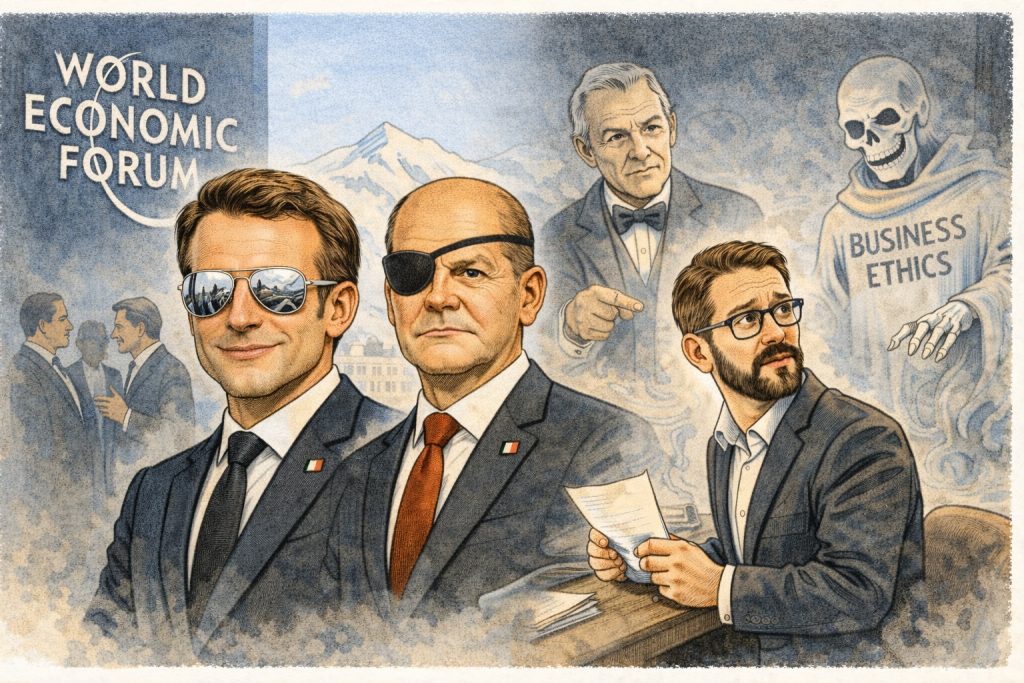
Chancellor’s Update
Dear Friends of New European College,
In my first year of bachelor studies, the first mandatory course was Business Ethics.
At the time, I was officially studying business, though in truth I had started out in International Relations and only later discovered my genuine passion for business.
Choosing business studies initially had more to do with making my family happy than with personal conviction.
Just before the course started, I called my father and casually mentioned that I found Business Ethics a bit of a paradox.
My father — whose own scientific interests lay in medical ethics — laughed. Then he asked me a question that stayed with me:
“Do you think James Bond movies are essentially long advertisements for British cars and Swiss watches?”
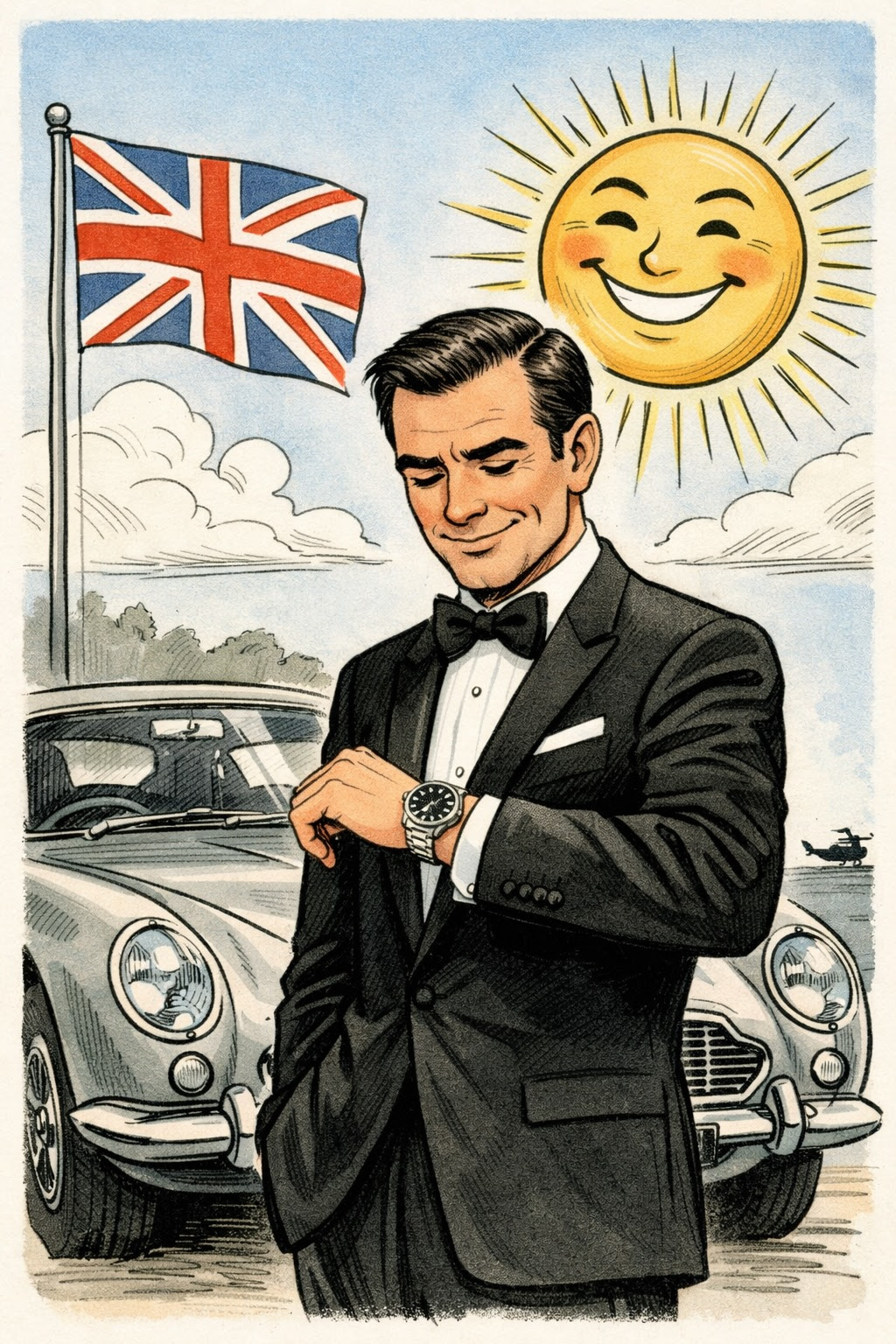
Then he asked: “And is that ethical?”
That question sparked my curiosity — and, in many ways, my lasting interest in Business Ethics. (And yes, today product placement must be declared. Progress. 😊)
Thanks to the internet and social media, we are now surrounded by influence in all its forms:
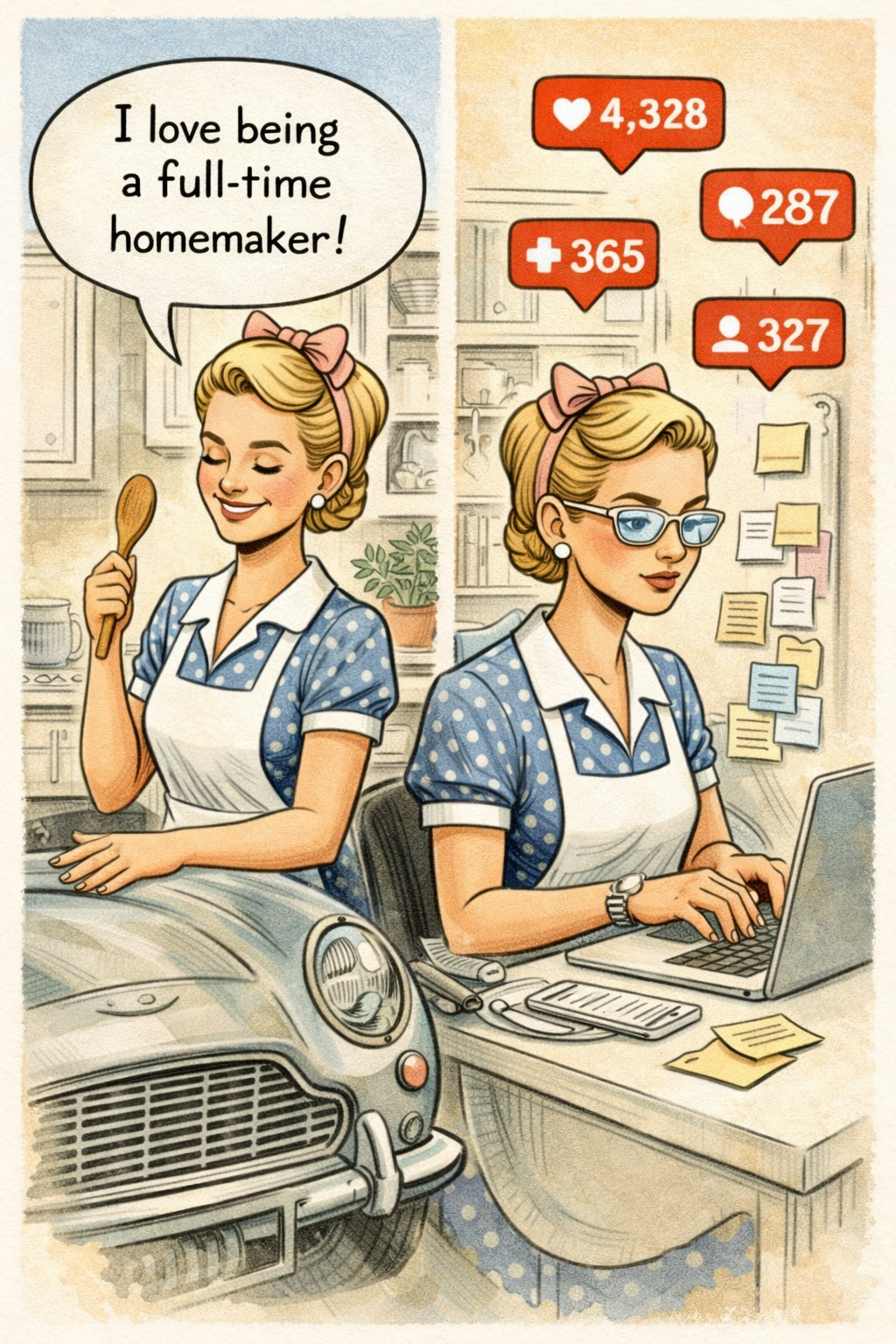
from James Bond wearing Brioni suits, to so-called tradwives, to aggressively self-styled masculinity influencers, to — in my case — oddly satisfying cleaning influencers.
Depending on which social media bubble (filter bubble) you inhabit, you encounter the same recurring faces and narratives.
Every now and then, however, an event breaks through almost all bubbles.
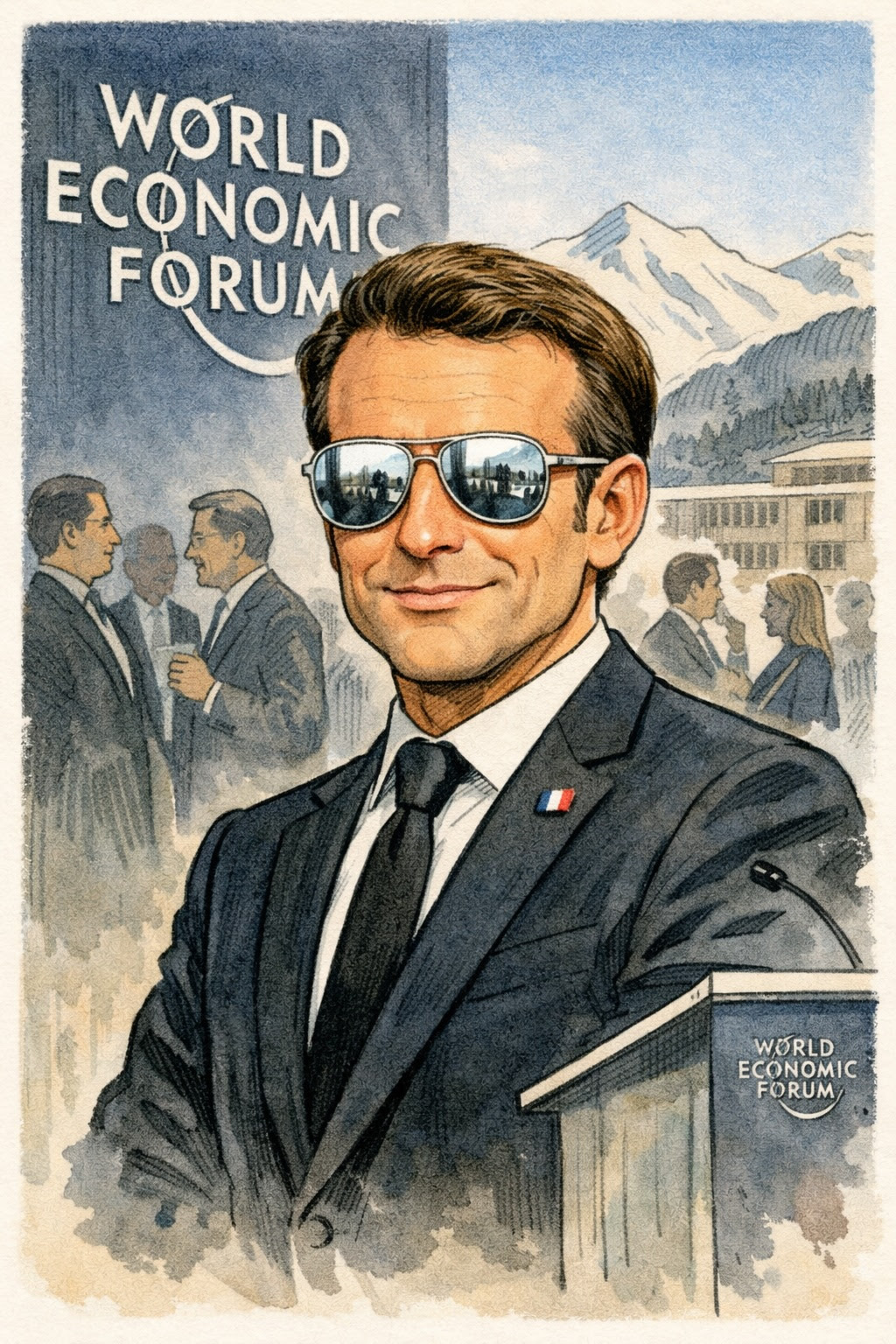
This time, it was French President Emmanuel Macron appearing at the World Economic Forum in Davos wearing sunglasses — reportedly to hide a burst blood vessel in his eye.
The result?
Demand for those sunglasses exploded.
The manufacturer’s website — selling €650 shades — temporarily crashed under the traffic.
Btw – Macron’s repeated use “For Sure” became a viral musical success…
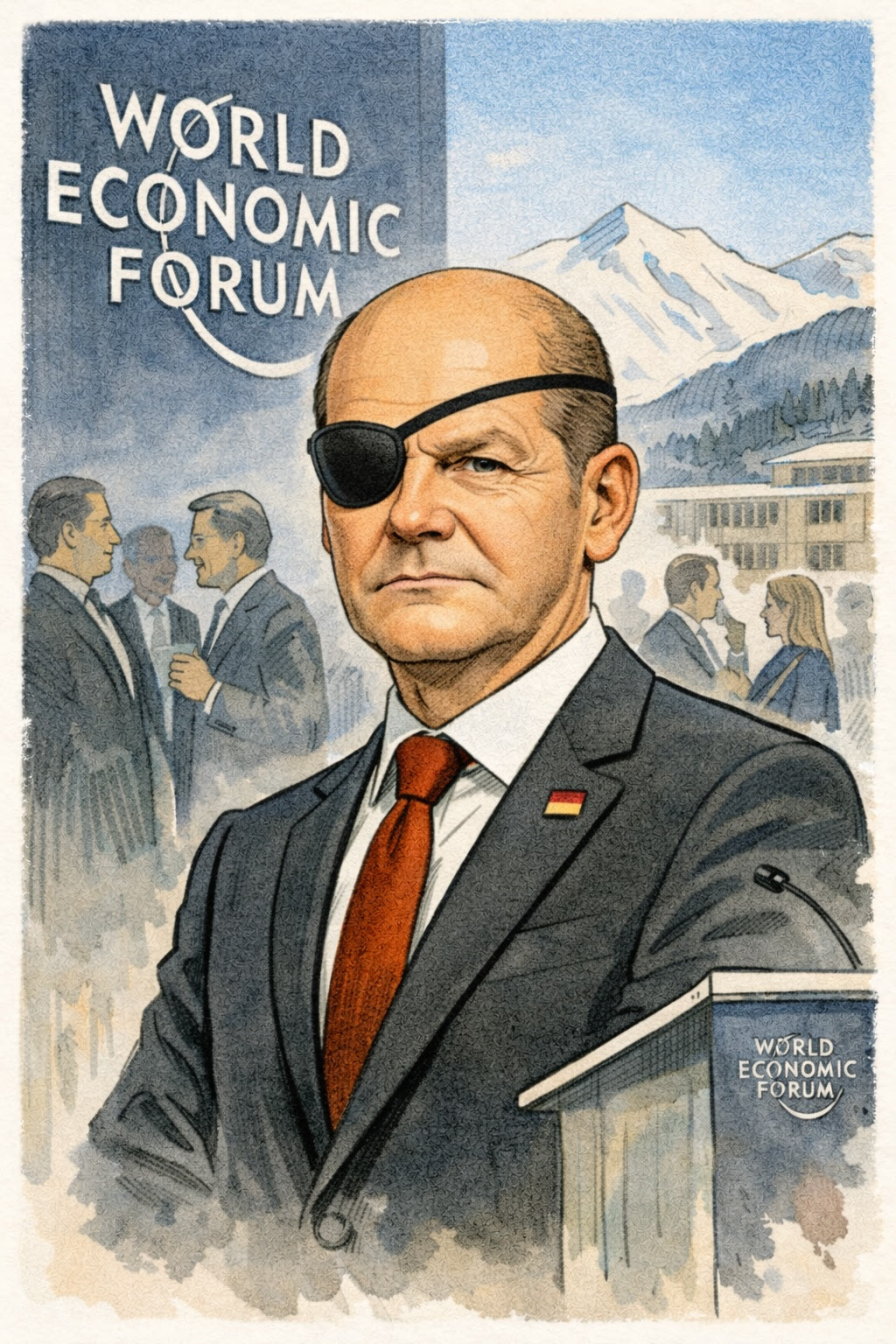
A few years ago, the German Chancellor found himself in a similar situation. He chose the German solution: an eye patch.
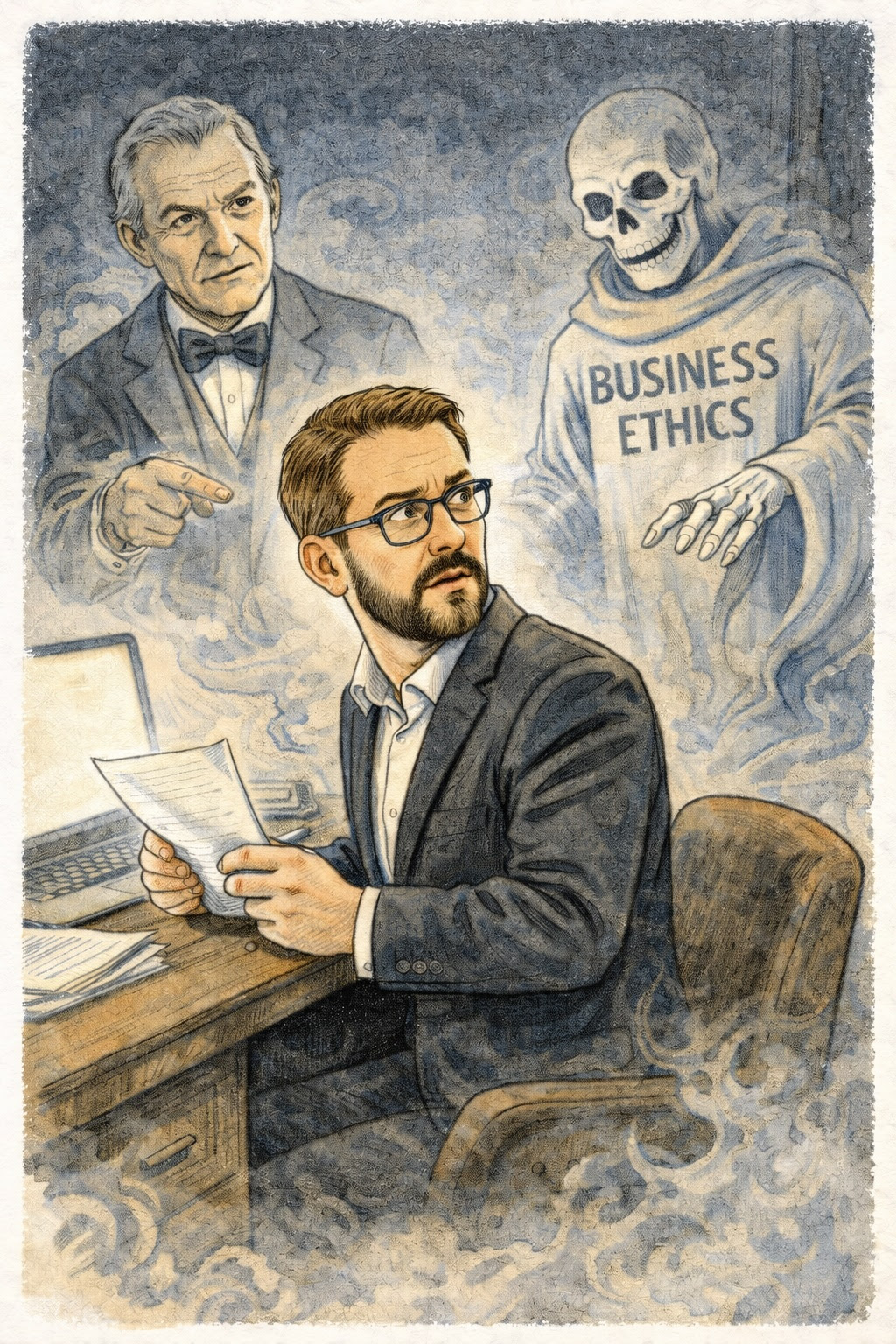
Naturally, reading about Macron brought my father — and Business Ethics — back to mind.
Did Macron know he would become the best salesperson imaginable for that sunglasses brand?
Was it a subtle promotion of French fashion?
Or simply the absence of an available eye patch at a critical moment?
We will never know. But the question itself is intellectually irresistible.
At the opposite end of the spectrum sits the recently announced Melania movie — an Amazon production that some see as an unusually direct act of sycophancy by Jeff Bezos toward Donald Trump.
The documentary reportedly follows the days in Melania Trump’s life shortly before the re-election campaign.
Disclaimer: I haven’t seen the movie yet — and of course, I will watch it purely for academic reasons.
Still, from a Business Ethics perspective, I find it deeply confusing.
Nothing against Melania Trump personally, but does it not feel strangely propagandistic to produce a film about a First Lady while her husband is still President?
At moments like this, my father and Business Ethics resurface again, quietly asking whether brand placement across politics, media, and commerce should not be declared just as rigorously as advertising.
And then I realise: perhaps this is no longer a question of business ethics at all.
Perhaps the real paradox lies in ethics in politics.
Warm regards,
Sascha Liebhardt