Limitations of the Unlimited
15. June 2026
Beyond the Beer: Discover the Fascinating Business Behind Oktoberfest
25. September 2026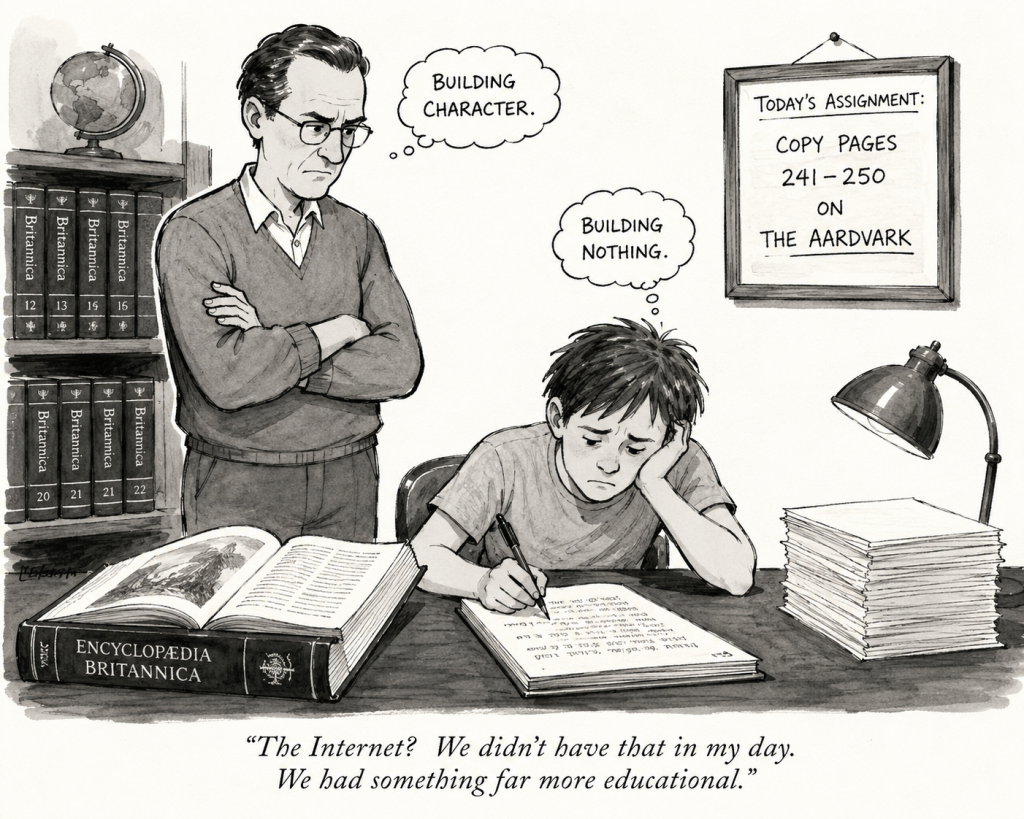
Chancellor’s Update
Dear Friends of New European College,
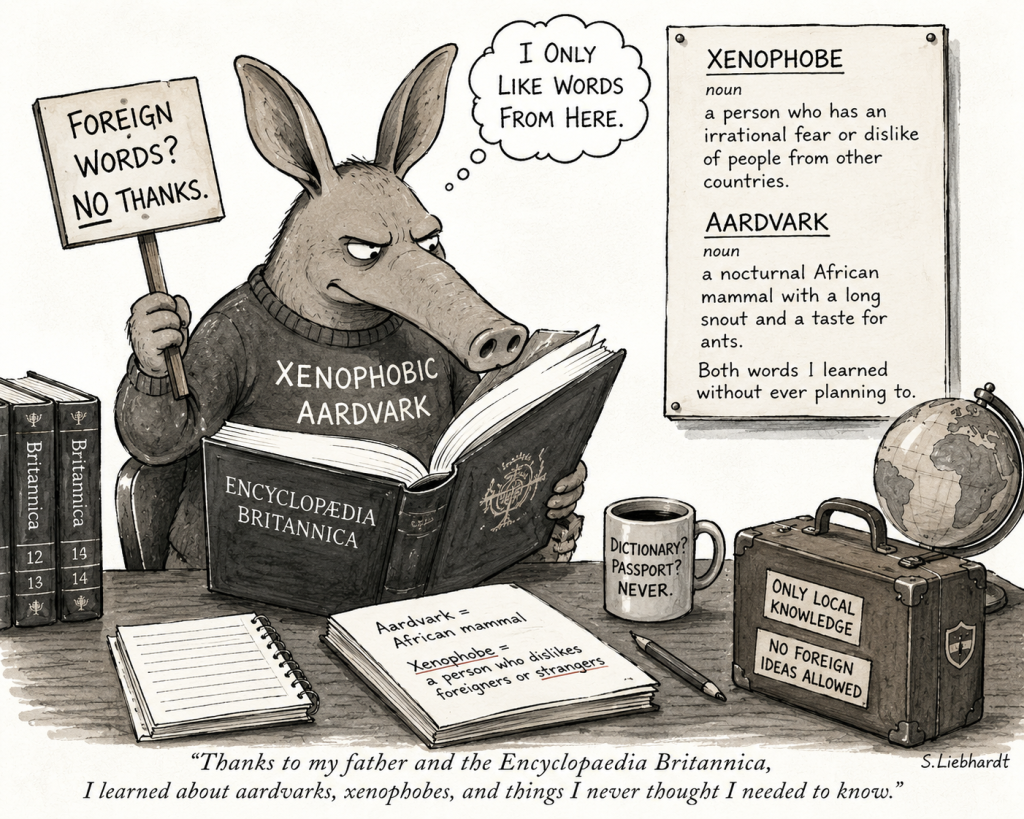
When I was young, my father had a rather peculiar method of broadening my education. He made me copy pages from the Encyclopedia Britannica. By hand.
It was, without exaggeration, one of the most boring duties of my young life.
But in retrospect, it was also rather brilliant.
 An encyclopedia is a comprehensive reference work containing articles on a broad range of subjects, traditionally arranged alphabetically and intended to provide an overview of human knowledge.
For those of you who have never encountered one: imagine Wikipedia printed on paper, occupying an entire bookshelf, weighing about as much as a small child — and already being out of date by the time it arrived at your house.
Copying those pages forced me to encounter things I would never have searched for myself.
This is why I know what an aardvark is. It is why I know what a xenophobe is.
And between A and X, I encountered thousands of ideas, people, countries, inventions, philosophies, animals and historical events that I had never thought of looking up.
And that is precisely the point.
Today, we have almost unlimited access to information. But access to information is not the same thing as having knowledge.
The Average Kisser
This becomes particularly important when we work with artificial intelligence and, especially, large language models.
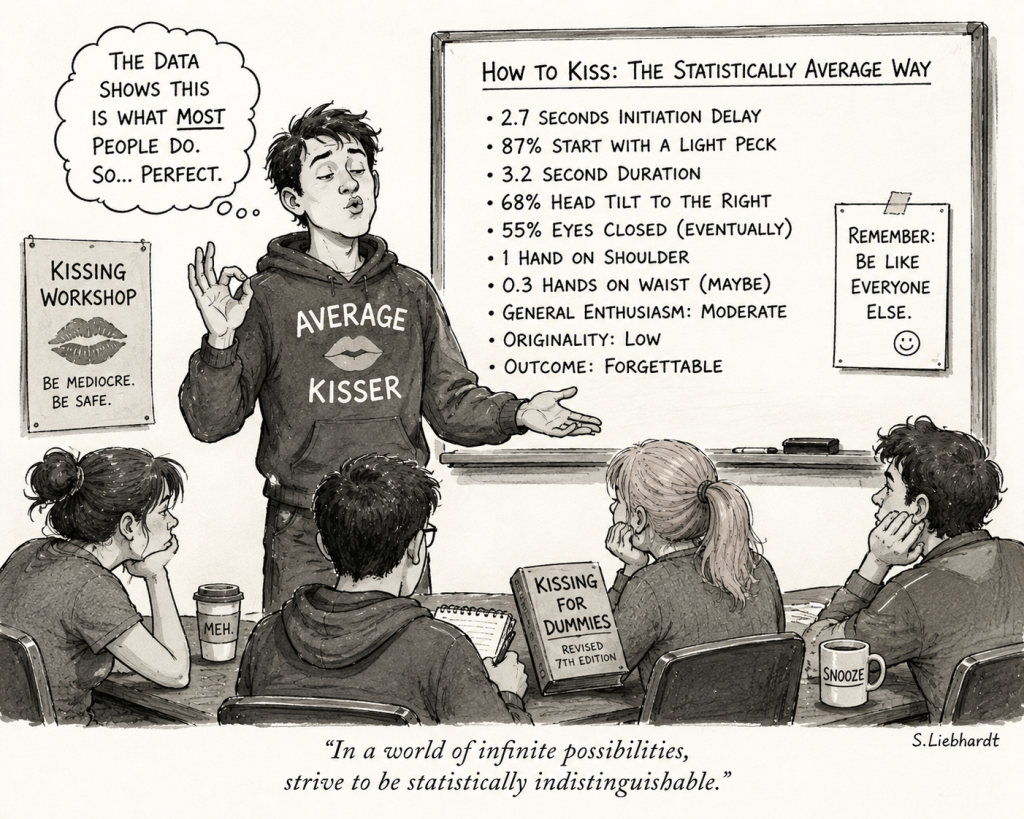
To work intelligently with AI, you need to know things yourself.
Why?
Because otherwise you cannot recognise when the machine gives you something mediocre, something nonsensical or something that is simply wrong.
To work intelligently with AI, you need to know things yourself.
For years, I have told my students that a cover letter should not be a festival of the word “I”. A company is not particularly interested in how wonderful you think you are. It wants to understand what you can contribute.
Yet now I regularly encounter AI-generated cover letters that read something like this:
I am excited to apply for this position. I believe I am an excellent candidate because I have strong communication skills. I have always been interested in your industry. I am highly motivated. I am a team player. I believe this opportunity would allow me to develop myself, and I am confident that I would be a valuable addition to your company.
I, I, I, I, I.
Would you date an average kisser? Would you hire an average cover letter?
By the end of the paragraph, I know an enormous amount about what the applicant wants and almost nothing about why the company should want the applicant.
Humans and Machines
This brings us to the much bigger question: How are we going to work with artificial intelligence in the future?
We frequently discuss the possibility that machines will one day become more intelligent than human beings in many or even most measurable intellectual tasks. I have little doubt that machines will surpass us in an ever-growing number of areas.
But intelligence is not necessarily consciousness.
And consciousness is one of the great unresolved questions of philosophy, psychology and neuroscience.
What does it actually mean to be conscious?
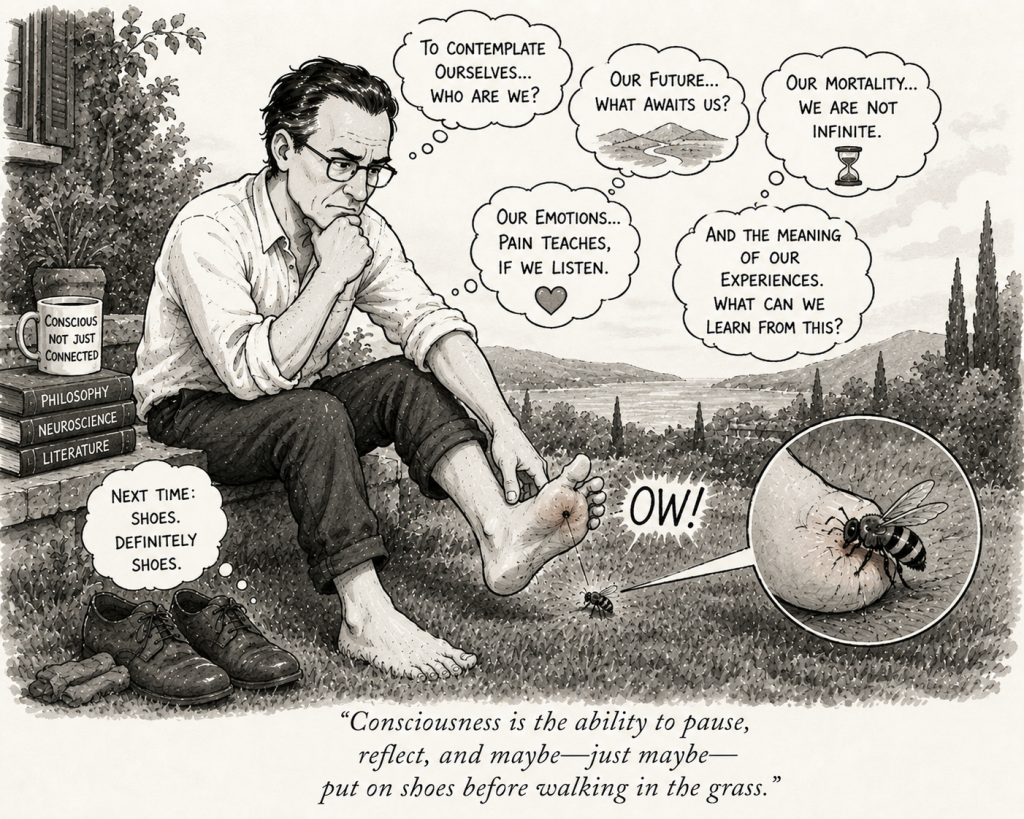
One proposed aspect is the capacity for subjective experience — including suffering. We humans do not merely respond to pain; we can anticipate it. We can remember it. We can fear its return. We can ask ourselves why we are suffering. We are conscious not merely of events, but of ourselves experiencing those events.
Animals also show forms and degrees of consciousness and sentience, so the distinction is not simply “humans conscious, animals unconscious.”
What is particularly developed in humans is our capacity for reflective self-consciousness: to contemplate ourselves, our future, our mortality, our emotions and the meaning of our experiences.
Whether a machine will ever possess anything comparable remains an open question.
A machine can write about love.
But does it love?
It can describe grief.
But does it grieve?
It can explain happiness.
But has it ever been happy?
And this is where our human advantage becomes fascinating.
Love, hate, pain, happiness, disappointment, curiosity, ambition, fear and hope combine with our accumulated knowledge and experiences to allow us to create new things.
But creativity needs material to work with.
And that material is knowledge.
So Please, Read
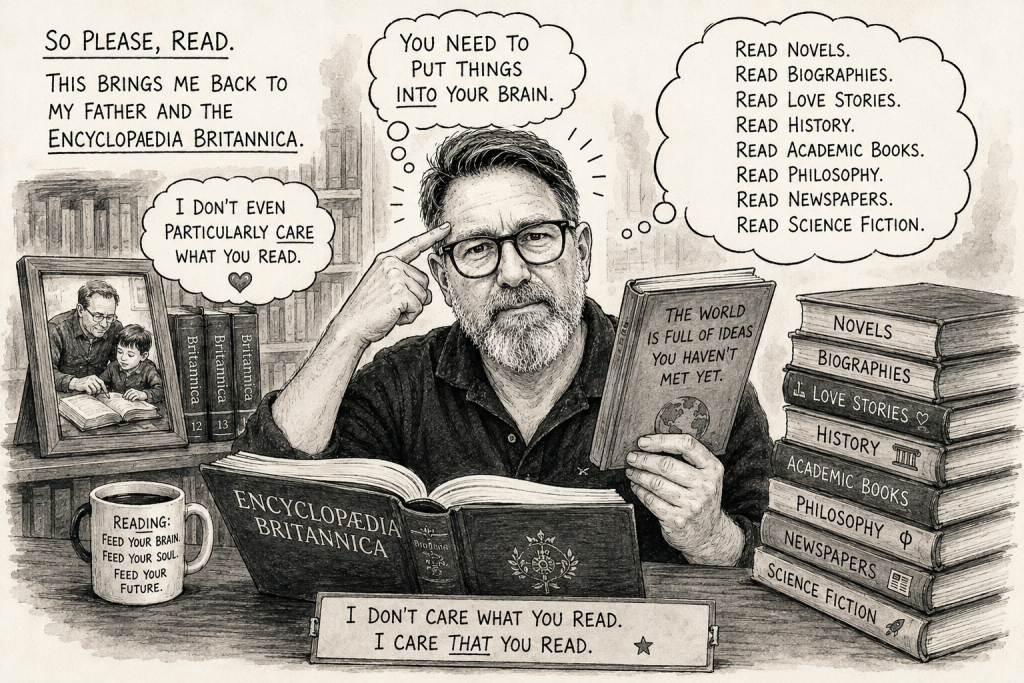
This brings me back to my father and the Encyclopaedia Britannica.
You need to put things into your brain.
Read novels. Read biographies. Read love stories. Read history. Read academic books. Read philosophy. Read newspapers. Read science fiction.
I don’t even particularly care what you read.
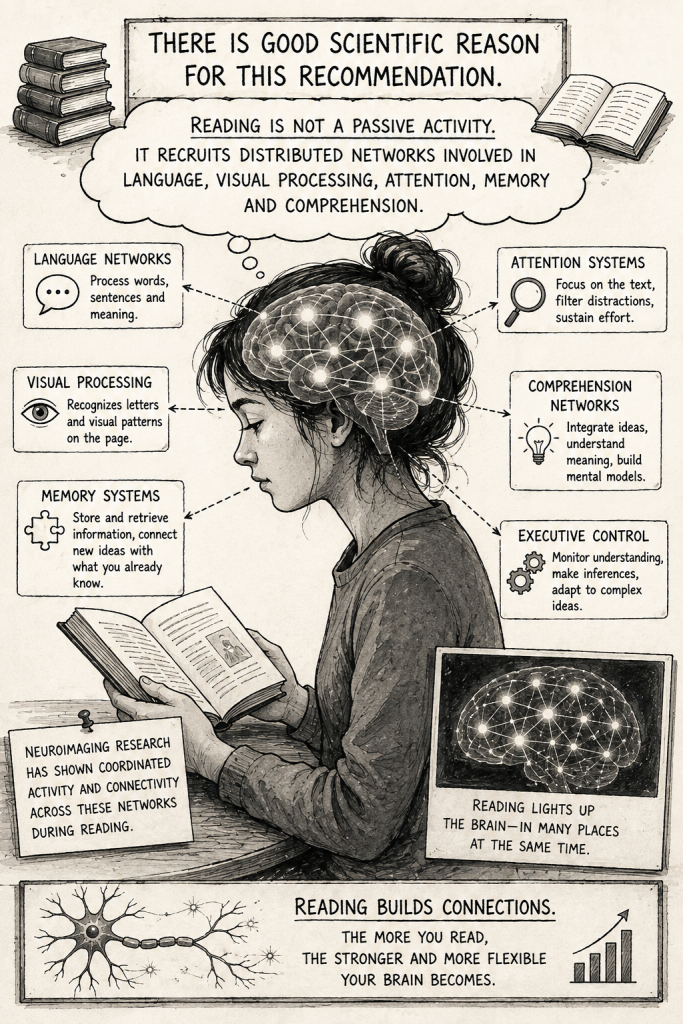
There is good scientific reason for this recommendation. Reading is not a passive activity. It recruits distributed networks involved in language, visual processing, attention, memory and comprehension. Neuroimaging research has shown coordinated activity and connectivity across these networks during reading.
I don’t care whether you read Dostoevsky, an economics textbook, The Economist, a love story, philosophy, cartoons or manga.
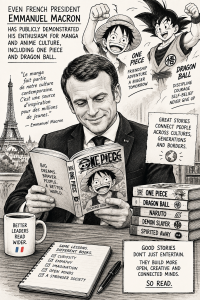
Even French President Emmanuel Macron has publicly demonstrated his enthusiasm for manga and anime culture, including One Piece and Dragon Ball.
The important thing is that you read.
Feed your brain things it did not ask for.
Encounter ideas you were not searching for.
Learn things that appear completely useless today, because one day two apparently unrelated pieces of knowledge may suddenly connect — and something genuinely new may emerge.
Use AI. Embrace AI. Learn how to work with it. It will become one of the most powerful intellectual tools humanity has ever created.
But don’t allow it to do your thinking for you.
Because the purpose of artificial intelligence should be to make human intelligence more powerful — not to make human beings intellectually lazy.
Read.
Stay curious.
And please…
don’t become an average kisser.
Sending you all my best wishes and wishing us a wonderful and intellectually curious academic year.
Sunny regards from Munich,
Sascha
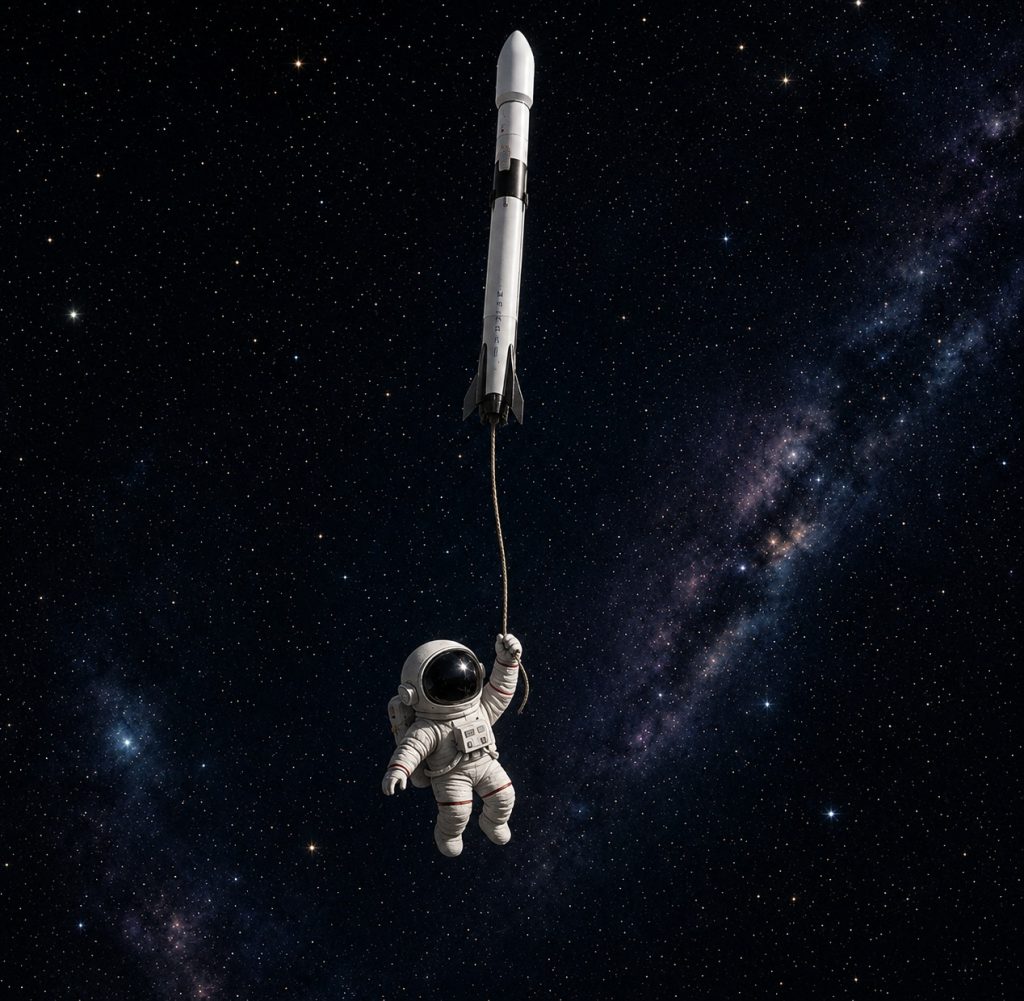
And yes, AI was used to create the cartoons, spellcheck, and check grammar. The rest is genuinely human.